
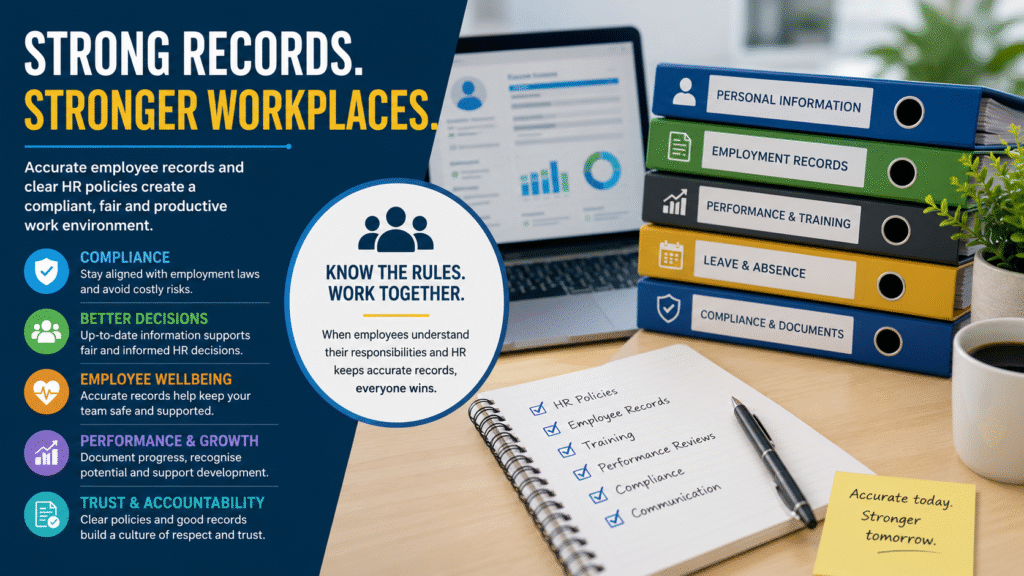
In every successful organisation, people are its greatest asset. However, managing employees effectively requires more than simply hiring the right people—it also means maintaining accurate, up-to-date employee records and ensuring every team member understands the basic Human Resources (HR) policies that govern the workplace.
Accurate records and clear HR knowledge are not just administrative tasks; they are essential for protecting both the employer and employees while creating a productive, compliant, and positive working environment.
The Importance of Accurate Employee Records
Employee records provide the foundation for good HR management. They contain vital information such as personal details, emergency contacts, employment contracts, training records, qualifications, performance reviews, disciplinary actions, leave records, and payroll information.
Keeping these records current offers several benefits:
1. Legal Compliance
Employment laws require organisations to maintain accurate records for various reasons, including payroll, taxation, working hours, health and safety, and right-to-work documentation. Up-to-date records help businesses demonstrate compliance during inspections or audits and reduce the risk of legal disputes.
2. Better Decision-Making
Managers rely on employee information to make informed decisions about promotions, salary reviews, succession planning, and workforce development. Inaccurate or outdated records can lead to poor decisions that affect both employees and the organisation.
3. Improved Employee Safety
Accurate emergency contact details, medical information (where appropriate), and training records are invaluable during emergencies. Ensuring mandatory health and safety training is recorded also helps organisations meet their duty of care.
4. Efficient Payroll and Benefits Administration
Incorrect employee data can result in payroll errors, incorrect tax deductions, or missed benefit entitlements. Regularly reviewing employee records helps ensure staff are paid accurately and receive the benefits they are entitled to.
5. Stronger Performance Management
Documenting performance reviews, training achievements, and development plans allows managers to support employee growth while maintaining fair and consistent performance management practices.
Why Employees Need to Understand Basic HR Rules
While HR departments manage policies and procedures, every employee has a responsibility to understand the workplace rules that apply to them.
Employees should be familiar with key areas such as:
- Company policies and procedures
- Attendance and absence reporting
- Working hours and overtime expectations
- Equality, diversity, and inclusion
- Anti-bullying and harassment policies
- Health and safety responsibilities
- Data protection and confidentiality
- Disciplinary and grievance procedures
- Annual leave and other employee benefits
Understanding these policies helps employees know what is expected of them and where to seek support when needed.
Building a Culture of Accountability
When employee records are maintained accurately and HR policies are communicated clearly, organisations build trust and accountability.
Employees feel confident knowing that:
- Their personal information is handled securely.
- Performance evaluations are based on documented evidence.
- Workplace rules are applied fairly and consistently.
- Opportunities for training and development are properly recorded.
Likewise, employers are better equipped to manage performance, resolve disputes, and demonstrate compliance with employment legislation.
Best Practices for Employers
To maintain effective HR records, organisations should:
- Review employee records regularly.
- Update personal information whenever changes occur.
- Keep training and certification records current.
- Record performance reviews consistently.
- Store information securely in accordance with data protection laws.
- Provide regular HR policy training and refreshers.
- Encourage employees to report changes to their personal details promptly.
Final Thoughts
Good Human Resources management is built on accurate information and clear communication. Keeping employee records up to date protects the organisation, supports employees, and ensures compliance with legal requirements. Equally important is ensuring employees understand the basic HR rules that guide workplace behaviour and expectations.
By investing time in maintaining accurate records and promoting HR awareness, organisations create a more organised, compliant, and engaged workforce—one that is better prepared to meet today’s workplace challenges and tomorrow’s opportunities.